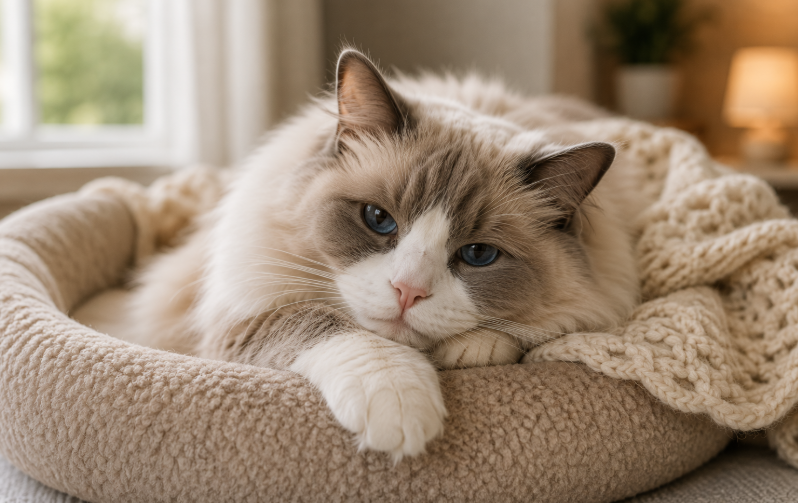
Watching a beloved Ragdoll grow older can feel emotional for many owners. Aging Ragdoll Cat Care becomes increasingly important because senior cats experience physical, emotional, and behavioral changes that require thoughtful support. While Ragdolls are known for their calm personalities and affectionate nature, aging may gradually affect mobility, appetite, grooming habits, and overall energy levels. Consequently, owners must adapt daily routines to help senior cats stay comfortable and emotionally secure.
Many Ragdolls live long and healthy lives when they receive proper nutrition, regular veterinary care, and safe indoor environments. However, aging still brings natural changes that owners should understand early. Small differences in behavior or movement often signal that adjustments may improve quality of life significantly.
Senior Ragdolls usually become less active than younger cats. They may sleep longer, jump less frequently, or prefer quieter environments. Therefore, supportive home setups and predictable routines become more valuable with age.
Emotional care matters greatly too. Older Ragdolls often remain deeply attached to their owners and still crave affection and companionship regularly. Maintaining emotional connection helps aging cats feel safe and relaxed despite physical changes.
Understanding how aging affects the breed helps owners make better decisions involving nutrition, comfort, exercise, and daily care. With patience and proper attention, senior Ragdolls can continue living happy and emotionally fulfilling lives for many years.
When a Ragdoll Becomes a Senior Cat
Most cats gradually enter their senior years between seven and ten years old, although aging varies depending on genetics, health, and lifestyle. Ragdolls often age gracefully, yet subtle physical and behavioral changes usually appear over time.
Aging Ragdoll Cat Care should begin before major health issues develop. Early preventative care helps owners manage changes more effectively while supporting healthier long-term wellness.
Many senior Ragdolls begin sleeping more during the day. While increased rest is normal, dramatic changes in activity or personality deserve attention. Consequently, owners should monitor gradual behavioral shifts carefully.
Mobility often changes first. Older cats may hesitate before jumping or climbing because joints become stiffer with age. Arthritis commonly affects senior cats, especially larger breeds like Ragdolls.
Appetite may also fluctuate during aging. Some senior cats gain weight because of lower activity levels, while others lose weight because of dental problems or medical conditions.
Coat texture sometimes changes too. Older Ragdolls may groom less effectively, causing mild matting or oily fur buildup around difficult-to-reach areas.
Recognizing these changes early allows owners to create supportive routines before discomfort worsens significantly. Consequently, senior cats often remain more active and emotionally balanced with proper attention.
How Nutrition Changes for Senior Ragdolls
Nutrition becomes increasingly important as cats age. Senior Ragdolls often require adjustments involving calories, hydration, and nutrient balance to maintain healthy body condition and organ function.
Aging Ragdoll Cat Care routines should include high-quality diets rich in protein and moisture. Older cats still require strong muscle support, especially because aging naturally reduces muscle mass gradually.
Wet food often becomes more beneficial during senior years because it supports hydration and easier digestion. Consequently, many veterinarians recommend including moisture-rich meals regularly.
Calorie needs may decrease slightly because older cats usually become less active indoors. Therefore, portion control helps prevent obesity and unnecessary joint strain.
Dental health also affects eating habits significantly. Some senior cats struggle with hard kibble because of tooth pain or gum sensitivity. Softer textures may improve comfort and appetite naturally.
Omega-3 fatty acids sometimes help support joint and coat health as well. Balanced senior diets often include these nutrients specifically for aging cats.
Hydration deserves extra attention too. Kidney function changes gradually in many older cats, making fresh water access especially important for long-term health.
Owners should avoid sudden diet changes whenever possible because senior cats often adapt more slowly to unfamiliar foods. Gradual transitions help reduce stress and digestive upset.
Supporting Joint Health and Mobility
Mobility changes are among the most common challenges older Ragdolls face. Their larger body size may place additional pressure on joints as they age, especially if weight management becomes difficult.
Aging Ragdoll Cat Care plans should prioritize gentle movement and accessible home layouts. Cats experiencing arthritis or stiffness often avoid jumping or climbing because of discomfort.
Low-entry litter boxes help significantly for senior cats struggling with mobility. High box sides may become painful or difficult to navigate comfortably.
Soft ramps or pet stairs also improve accessibility around furniture and favorite resting areas. Consequently, older cats maintain independence while reducing injury risks.
Gentle daily activity remains important too. Interactive play encourages movement while helping maintain muscle tone and flexibility naturally.
Weight management strongly affects mobility as well. Excess body fat increases pressure on joints, making arthritis symptoms worse over time. Therefore, balanced feeding routines become especially valuable during senior years.
Warm sleeping spaces often improve comfort for aging joints. Heated pet beds or soft blankets help many older cats relax more comfortably, especially during colder weather.
Veterinary guidance becomes essential if limping, stiffness, or movement reluctance develops suddenly. Early treatment often improves comfort significantly while slowing further mobility decline.
Creating a Senior-Friendly Home Environment
Indoor environments strongly influence senior feline comfort. Older cats generally feel safest in calm, predictable, and accessible spaces where movement feels easy and stress remains low.
Aging Ragdoll Cat Care should include home adjustments that support comfort without drastically disrupting familiar routines. Small changes often create meaningful improvements in daily quality of life.
Accessible resting spots become increasingly important. Older cats may stop using high cat trees or difficult climbing areas because of joint discomfort. Therefore, lower and softer sleeping spaces help support relaxation.
Food, water, and litter stations should remain easy to reach. Large homes sometimes require multiple stations so senior cats do not need excessive movement to meet basic needs.
Floor traction matters too. Slippery surfaces may increase fall risks or discourage movement entirely. Rugs or soft mats often improve stability for aging cats.
Quiet spaces also help reduce stress. Senior Ragdolls generally prefer calm environments with fewer sudden noises or disruptions.
Consistent furniture placement becomes valuable because older cats rely heavily on familiarity and predictable pathways. Frequent rearranging may create confusion or anxiety unnecessarily.
Environmental comfort supports emotional wellness alongside physical health. Safe and accessible homes help aging cats remain more confident and emotionally secure indoors.
The Emotional Needs of Senior Ragdolls
Even as they age, Ragdolls remain highly affectionate and emotionally connected to their owners. Many continue seeking companionship, gentle interaction, and daily routines throughout their senior years.
Aging Ragdoll Cat Care should always include emotional support because older cats sometimes become more sensitive to stress and environmental change. Loneliness or disrupted routines may affect senior cats more strongly than younger ones.
Many older Ragdolls enjoy quieter forms of interaction rather than intense play sessions. Gentle petting, calm conversation, and simply resting beside owners often provide emotional comfort naturally.
Some senior cats also become more clingy with age. Reduced confidence, hearing changes, or declining vision sometimes increase dependence on familiar people and routines.
Maintaining daily interaction helps support emotional stability and cognitive health. Consequently, emotionally engaged cats often remain more alert and socially connected.
Changes in household dynamics may also affect older cats strongly. New pets, loud visitors, or sudden routine changes sometimes increase anxiety significantly.
Patience becomes especially important during aging because senior cats may adapt more slowly to physical or environmental changes. Calm reassurance and predictable care help create emotional security.
Grooming and Hygiene for Older Cats
Senior Ragdolls often struggle with grooming as flexibility and mobility decrease gradually. Consequently, owners usually need to assist more with coat maintenance during later years.
Aging Ragdoll Cat Care routines should include regular brushing to prevent mats, tangles, and oily fur buildup. Long-haired cats especially benefit from gentle daily grooming sessions.
Older cats sometimes stop grooming hard-to-reach areas entirely because of joint stiffness or discomfort. Consequently, mats often develop around the hips, lower back, or belly if owners do not intervene regularly.
Gentle grooming also helps owners monitor skin condition, weight changes, and unusual lumps or sensitivity. Early detection often improves treatment outcomes significantly.
Nail trimming becomes more important too. Senior cats may scratch less frequently, causing nails to overgrow and become uncomfortable.
Eye cleaning occasionally becomes necessary because some older cats develop mild tear staining or discharge. Soft damp cloths usually work well for gentle cleaning.
Dental care remains extremely important during aging as well. Dental disease affects appetite, comfort, and overall health significantly in senior cats.
Grooming sessions also strengthen emotional bonds between owners and aging pets. Calm interaction during care routines often helps older Ragdolls feel secure and loved.
Recognizing Common Senior Health Problems
Aging increases the risk of various health conditions that require monitoring and veterinary support. Early recognition often helps improve comfort and long-term management significantly.
Aging Ragdoll Cat Care should include regular veterinary checkups because many diseases develop gradually and remain difficult to notice initially.
Kidney disease is common in senior cats and may cause increased thirst, weight loss, or appetite changes. Consequently, hydration monitoring becomes increasingly important with age.
Arthritis also affects many older Ragdolls because of their larger body structure. Stiffness, reduced jumping, or slower movement often indicate joint discomfort.
Dental disease frequently develops too. Bad breath, drooling, or difficulty eating may signal oral pain requiring treatment.
Hyperthyroidism sometimes appears in older cats as well. Weight loss despite increased appetite often becomes one of the earliest signs.
Cognitive changes occasionally occur during advanced aging. Confusion, nighttime vocalization, or unusual behavior may indicate cognitive decline similar to dementia.
Owners should never assume sudden behavior changes are simply “normal aging.” Veterinary evaluation helps identify treatable conditions early while improving overall comfort and quality of life.
Maintaining Healthy Weight During Aging
Weight management becomes more challenging during senior years because metabolism and activity levels change gradually. Some older Ragdolls gain weight from inactivity, while others lose weight because of illness or reduced appetite.
Aging Ragdoll Cat Care routines should include regular weight monitoring because even small changes may signal health concerns.
Obesity increases joint pressure and mobility problems significantly. Consequently, portion control and balanced nutrition help maintain healthier movement and comfort.
On the other hand, unexpected weight loss often requires veterinary attention. Muscle loss and reduced appetite sometimes indicate kidney disease, thyroid problems, or dental pain.
Gentle activity still matters for older cats too. Short interactive play sessions encourage movement while supporting muscle maintenance naturally.
Body condition matters more than weight numbers alone. Owners should monitor muscle tone, waist shape, and overall mobility consistently.
Veterinary guidance helps determine ideal nutrition plans based on age, health conditions, and activity levels. Consequently, individualized care usually supports healthier long-term aging outcomes.
Conclusion
Caring for a senior Ragdoll requires patience, observation, and thoughtful daily support. Aging Ragdoll Cat Care focuses on maintaining comfort, emotional wellness, mobility, and overall quality of life as physical needs gradually change.
Older Ragdolls still thrive on affection, companionship, and predictable routines even as their bodies slow down. Proper nutrition, accessible home environments, and regular veterinary care all contribute significantly to healthier aging indoors.
Joint support, hydration, grooming assistance, and emotional reassurance help senior cats remain more confident and comfortable throughout later life stages. Small adjustments often create major improvements in mobility and emotional stability.
Owners who recognize aging changes early usually provide more effective long-term support for their cats. Preventative care and consistent observation help address problems before discomfort becomes severe.
Senior Ragdolls continue offering deep companionship and affection throughout their lives. With proper attention and compassionate care, aging cats can remain happy, emotionally connected, and comfortable for many wonderful years ahead.
FAQ
1. At what age is a Ragdoll considered senior?
Most Ragdolls begin entering their senior years between seven and ten years old.
2. Why do older Ragdolls sleep more often?
Senior cats naturally conserve more energy and generally become less active with age.
3. How can I help my aging cat move comfortably?
Soft ramps, warm beds, healthy weight management, and accessible spaces often improve mobility.
4. Do senior Ragdolls still need playtime?
Yes. Gentle daily activity supports muscle tone, emotional wellness, and healthier aging.
5. What health problems affect older Ragdolls most often?
Arthritis, kidney disease, dental issues, and weight changes commonly affect senior cats.